
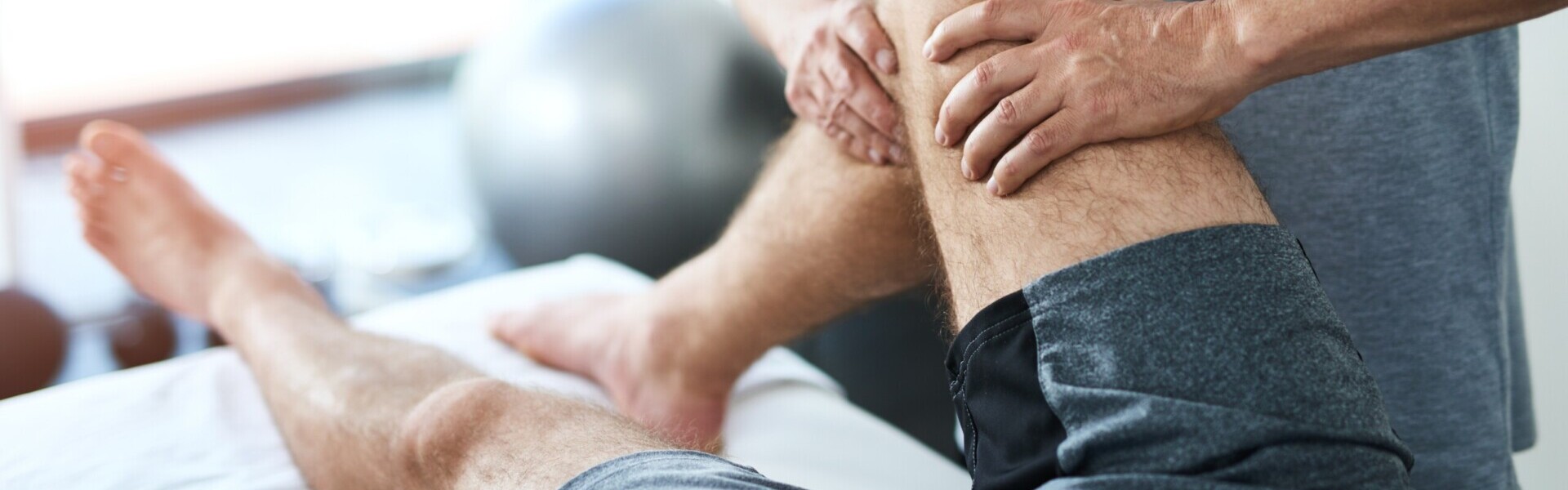
A new hip or knee can transform how you get around, but the operation is only half of it. The strength you build beforehand, and the weeks and months afterwards, make a real difference to how quickly you’re walking comfortably, managing stairs and getting back to the garden, the golf course or long walks. Many people want more support than they get after leaving hospital, or simply someone to check they’re on track.
Is this you?
- You’re waiting for a hip or knee replacement and want to go in as strong as possible
- You’ve had your operation and want more help with your exercises
- Your knee won’t bend or straighten as far as you’d hoped
- You’re walking with a limp, or still relying on a stick or crutches
- Stairs, getting in and out of the car or standing up from low chairs are still hard
- You want to get back to walking, golf, gardening or the gym
Before your operation
Prehab means preparing your body for surgery. It usually involves strengthening the muscles around the hip or knee, keeping the joint moving and practising what you’ll need afterwards, such as walking with crutches and getting up from a chair. Being stronger and more confident before your operation tends to make the first weeks afterwards easier, and it’s a good chance to plan your home set-up and get your questions answered.
After your operation
- The first few weeks. Following your surgeon’s advice, managing pain and swelling, walking with your aids and doing your early exercises little and often.
- Getting movement back. After a knee replacement, bending and straightening fully is a priority early on. After a hip replacement, the focus is on walking well and moving within any precautions your surgeon has given you.
- Rebuilding strength and balance. Progressive exercises for the hip, thigh and calf, and balance work so you feel steady on your feet.
- Everyday function. Stairs, getting in and out of the car, longer walks and getting down to the floor and back up, if that’s something you need.
- Getting back to what you enjoy. A gradual plan for golf, walking, swimming, cycling or the gym.
Your surgeon’s protocol always comes first, so bring any information you were given at the hospital.
Measuring your progress
Where it helps, we use VALD ForceDecks force plates to measure how evenly you’re taking weight through each leg, your balance and how easily you stand up from a chair. Many people favour their operated side for longer than they realise, and seeing the numbers change can be reassuring. ForceDecks testing is included in your physiotherapy at no extra cost when your physio thinks it will help. Find out more about ForceDecks testing.
Your first appointment
Your first appointment lasts 45 minutes. We’ll ask about your operation, or the one coming up, how you’re getting on day to day and what you want to get back to. We’ll check your movement, strength, walking and balance, go through your exercises and adjust them if needed. You’ll leave with a clear plan and an idea of how often it’s worth coming in, which for most people is more often early on and less as you become more independent.
We see people whether their operation was on the NHS or private.
When to contact your surgical team or GP
Contact your surgical team or GP the same day if:
- Your wound becomes red, hot or swollen, starts to leak, or you develop a temperature
- Your calf becomes painful, swollen or warm, which can be a sign of a blood clot
- You have sudden severe pain, or after a hip replacement your leg suddenly looks shorter or turned outwards
- You fall and can’t put weight on the leg
Call 999 if you have chest pain or sudden breathlessness.
Who you'll see
Rehab after joint replacement is led here by Kirk Proto, a chartered physiotherapist with specialist experience in rehabilitation after knee and hip surgery. He combines exercise-based rehab with hands-on treatment and acupuncture where it helps.

Kirk Proto
Physiotherapist,
Acupuncture Physiotherapist

Kirk is a dedicated Chartered Physiotherapist who retrained following a successful career in the finance sector, graduating from the University of Brighton. He has since built a strong clinical reputation for his thorough, evidence-based approach and is also qualified in medical acupuncture.
With a personal passion for health and fitness, including CrossFit and cricket, Kirk brings both clinical expertise and real-world insight to his work. He treats a broad range of musculoskeletal conditions, with a particular interest in helping patients manage chronic low back pain and nerve-related symptoms, including those caused by spinal disc herniations.
Kirk also has specialist experience in post-operative rehabilitation, particularly following knee and hip surgeries, as well as injuries to the knee, ankle, and shoulder. He uses a tailored combination of techniques including soft tissue therapy, acupuncture, and exercise-based rehab, focusing not just on relieving pain but on restoring function and helping patients return to the activities they enjoy most.
Kirk is recognised by several major private healthcare providers, including AXA, AVIVA, Simply Health, WPA, Westfield, and bhsf.
Insurers Kirk Works With


Martin Ratcliffe
Physiotherapist,
Acupuncture Physiotherapist
Martin is a Chartered Physiotherapist with extensive experience in both private practice and elite sport. After completing a degree in Sport and Exercise Science in Liverpool, he went on to qualify in Physiotherapy at the University of Brighton. His early experience in musculoskeletal outpatient care laid the foundation for his passion for rehabilitation and patient-centred recovery.
Martin has a strong clinical interest in knee injuries, particularly ACL rehabilitation and return-to-sport planning. He continues to work with the Brighton & Hove Albion Under-23s, where he plays an active role in the assessment, treatment, and performance management of developing professional athletes. This ongoing involvement in elite football has sharpened his understanding of high-level rehab and the demands of returning to sport both physically and mentally.
At The Health Hub, Martin combines hands-on treatment with tailored, progressive exercise rehabilitation. Whether you’re recovering from ACL surgery, managing chronic knee pain, or aiming to return to sport with confidence, Martin delivers expert, evidence-based care to support your recovery every step of the way.
A keen runner and golfer, Martin brings a real-world understanding of movement and performance to his clinical work, helping patients get back to doing what they love.
Martin works with a number of private healthcare insurance companies including AXA, AVIVA, Simply Health, WPA, Westfield and bhsf.
Insurers Martin Works With
Prices and insurance
- Initial physiotherapy assessment and treatment (45 minutes): £79
- Follow-up treatment (30 minutes): £64
ForceDecks testing is included in your physiotherapy at no extra cost when your physio thinks it will help. No GP referral is needed. You pay at your appointment and we’ll give you an invoice to claim back from your insurer if you’re covered. Martin and Kirk are recognised by AXA, Aviva, BHSF, Simplyhealth, Westfield Health and WPA. Check with your insurer before booking, as policies vary.
Frequently asked questions
Questions we’re often asked about rehab after hip and knee replacement.
- When should I start physio after my operation?
-
Most people start exercises in hospital and can begin outpatient physiotherapy within the first few weeks, following their surgeon’s advice. If you’re not sure, bring your discharge information and we’ll work to it.
- How long does recovery take?
-
It varies. Many people are walking much more comfortably by six to twelve weeks, and strength and stamina often keep improving for a year or more.
- Is it worth having physio before my operation?
-
Often, yes. Building strength and confidence beforehand tends to make the early weeks easier, and it’s a chance to prepare your home and plan your recovery.
- When can I drive again?
-
Often around six weeks, but it depends on which leg was operated on, your car and your surgeon’s advice. Check with your surgeon and your insurer before driving.
- When can I play golf again?
-
Many people return to golf a few months after a hip or knee replacement, starting with putting and chipping. Your surgeon will advise on timing, and we can build a gradual plan to get you back.
- Do you see people who had their operation on the NHS?
-
Yes. Many people have their surgery on the NHS or privately elsewhere and do some or all of their rehab with us.
- Do I need a GP referral?
-
No, you can book directly. If your rehab is covered by private health insurance, check with your insurer first.
Based in Haywards Heath, we see patients from:
You’ll find us at Unit 3, 2-8 Sussex Road, Haywards Heath, RH16 4EA. There’s free on-street parking on Sussex Road and two pay and display car parks a short walk away, and our entrance, treatment rooms and toilets are wheelchair accessible. We’re open Monday to Friday 8am to 7pm, and Saturday 8am to 1pm.
Book an appointment
If you’re preparing for, or recovering from, a hip or knee replacement, book online or call us on 01444 817851.
Testimonials
Latest News
Keep up to date with our latest news.


As the days grow shorter and the weather begins to...

At The Health Hub, we are always looking for ways...