
Sciatica Treatment in Haywards Heath
Shooting pain down your leg? Let’s find out why.
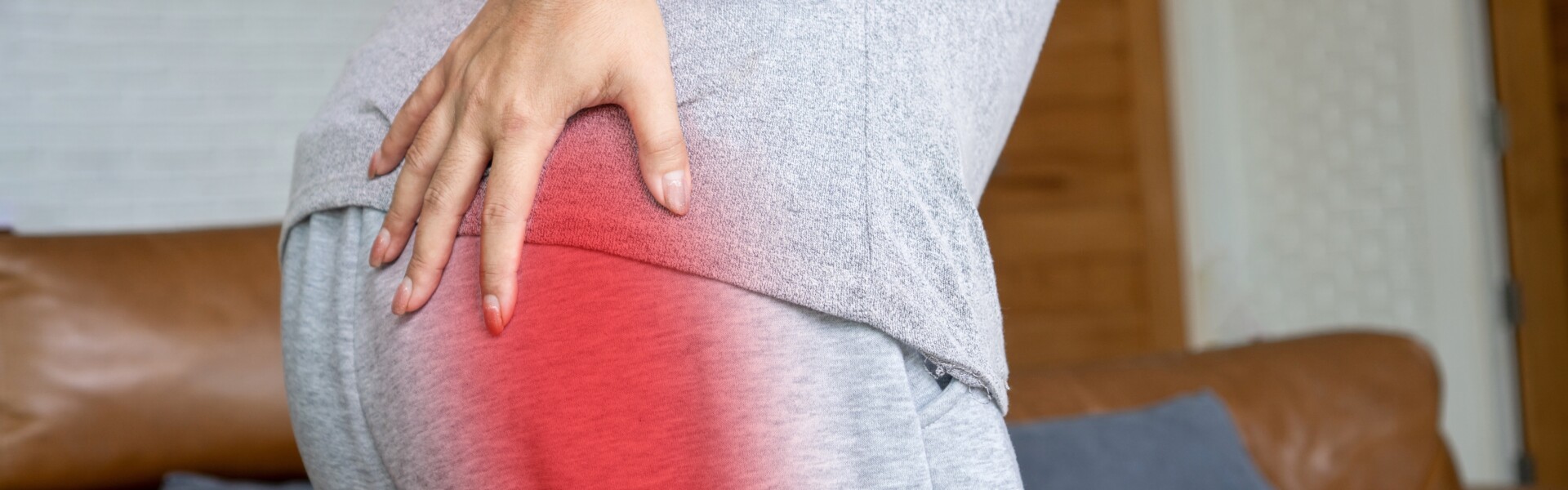
Sciatica isn’t a diagnosis; it’s a symptom. The sciatic nerve runs from your lower back through your buttock and down your leg, and pain along it can come from a disc, a joint, a tight muscle or an irritated nerve root. The treatment that works depends entirely on which one it is. That’s why our first job is a proper assessment, not a generic set of stretches.
What sciatica feels like
Most people describe one or more of: pain radiating from the lower back or buttock down the back of the leg; burning, tingling or pins and needles below the knee; numbness in the leg or foot; pain that’s worse sitting, coughing or first thing in the morning; weakness in the leg or foot. Usually it affects one side. If you have numbness around the saddle area, changes to bladder or bowel control, or weakness in both legs, treat it as an emergency and go to A&E; that’s rare, but it matters.
What’s actually causing it
The most common culprits we see in clinic: a lumbar disc bulge irritating a nerve root (the classic cause, and far more treatable than people fear, most disc-related sciatica settles well without surgery); facet joint irritation referring pain into the leg; deep gluteal syndrome, where muscles in the buttock irritate the nerve; and spinal stenosis in over-60s, where leg symptoms come on with walking and ease with sitting. Each looks similar on the surface and responds to different treatment; this is where an accurate diagnosis pays for itself.
How we treat sciatica at The Health Hub
As a multidisciplinary clinic, you’re not limited to one approach. Your assessment identifies the source, then we build a plan that may include hands-on treatment (mobilisation, manipulation where appropriate, soft-tissue work) from our physiotherapists, chiropractors or osteopaths; specific nerve-mobilising exercises; a graded strength programme so it doesn’t come back; medical acupuncture; and clear guidance on positions, movement and activity while it settles. Most patients feel meaningful change within 2-6 sessions; nerve symptoms can take longer to fully clear, and we’ll be honest with you about timescales at your first visit.
How long does sciatica take to heal?
Mild cases often settle in 4-6 weeks with the right management. Disc-related nerve root pain typically improves substantially over 6-12 weeks. The mistake that slows people down most is total rest; the evidence is clear that staying gently active helps people recover faster than bed rest.
Why patients choose us for sciatica
Physio, chiropractic and osteopathy under one roof means your treatment isn’t limited by who you happened to book with. We assess first, explain what we find in plain English, and refer for imaging or specialist opinion when it’s genuinely needed.
5★ rated by 250+ patients across Haywards Heath, Lindfield, Cuckfield, Burgess Hill and Hassocks.
Therapies
Physiotherapy
Rebuild strength, improve movement and reduce nerve irritation.

Chiropractic
Hands-on treatment to reduce joint restriction and nerve pressure.

Osteopathy
Whole-body approach to reduce strain and improve mobility.
Why choose The Health Hub?
- ✔️ We identify the true cause of your sciatica
- ✔️ Multiple therapies under one roof
- ✔️ No guesswork, we guide you
- ✔️ Experienced team treating back & nerve pain daily
- ✔️ Focus on long-term results
You don’t need to decide what treatment you need.
We do that for you.
When should you get sciatica checked?
You should seek help if:
- Pain is travelling down your leg
- Symptoms are worsening
- It’s affecting sleep or daily life
- You’ve had repeated episodes
👉 Early diagnosis = faster recovery.
Sciatica treatment near you
We regularly treat patients from:
If you’re searching for:
- “Sciatica treatment near me”
- “Physio for sciatica Haywards Heath”
You’re in the right place.
Start your recovery today
Sciatica doesn’t just go away by chance.
The sooner you address the cause, the sooner you improve.
Frequently Asked Questions
- What is the fastest way to relieve sciatica?
-
The fastest way to relieve sciatica is to reduce pressure on the nerve.
This may involve:
- Hands-on treatment
- Medical acupuncture
- Targeted exercises
- Improving movement patterns
Quick relief is possible, but long-term results come from fixing the cause.
- How do I know if I have sciatica?
-
Common signs include:
- Pain travelling down one leg
- Tingling or numbness
- Burning or sharp pain
- Symptoms worse when sitting
If your pain stays only in your back, it’s less likely to be sciatica.
- What causes sciatica to flare up?
-
Sciatica flare-ups are often triggered by:
- Bending or lifting
- Prolonged sitting
- Sudden increases in activity
- Underlying disc or joint issues
- Hip issues
- How long does sciatica last?
-
- Mild cases → a few weeks
- Moderate cases → several weeks with treatment
- Persistent cases → require structured rehab
The key is addressing the cause early.
- Should I rest or keep moving with sciatica?
-
In most cases, gentle movement is better than complete rest.
Too much rest can:
- Increase stiffness
- Slow recovery
The goal is controlled movement with guidance.
- Can a slipped disc cause sciatica?
-
Yes, this is one of the most common causes.
A disc bulge or herniation can press on the sciatic nerve, leading to leg pain.
- Do I need a scan for sciatica?
-
Whilst MRI scans offer the gold standard for visualising a disc bulge or herniation.
Most cases can be diagnosed through:
- Clinical assessment
- Movement testing
Scans are only needed in specific situations.
- Why does my sciatica keep coming back?
-
Recurring sciatica usually means:
- The root cause hasn’t been addressed
- Movement patterns haven’t changed
- Strength hasn’t been restored
- Is sciatica serious?
-
Most cases are not serious and improve with treatment.
However, if symptoms are severe or worsening, affect both legs, or affect bowel or bladder function, it’s essential to get assessed.
- Who should I see for sciatica?
-
This depends on the cause.
At The Health Hub, we offer:
👉 You don’t need to decide, we guide you.
- Where can I get sciatica treatment near me?
-
The Health Hub is based in Haywards Heath.
We treat patients from across Mid Sussex and the surrounding areas.