
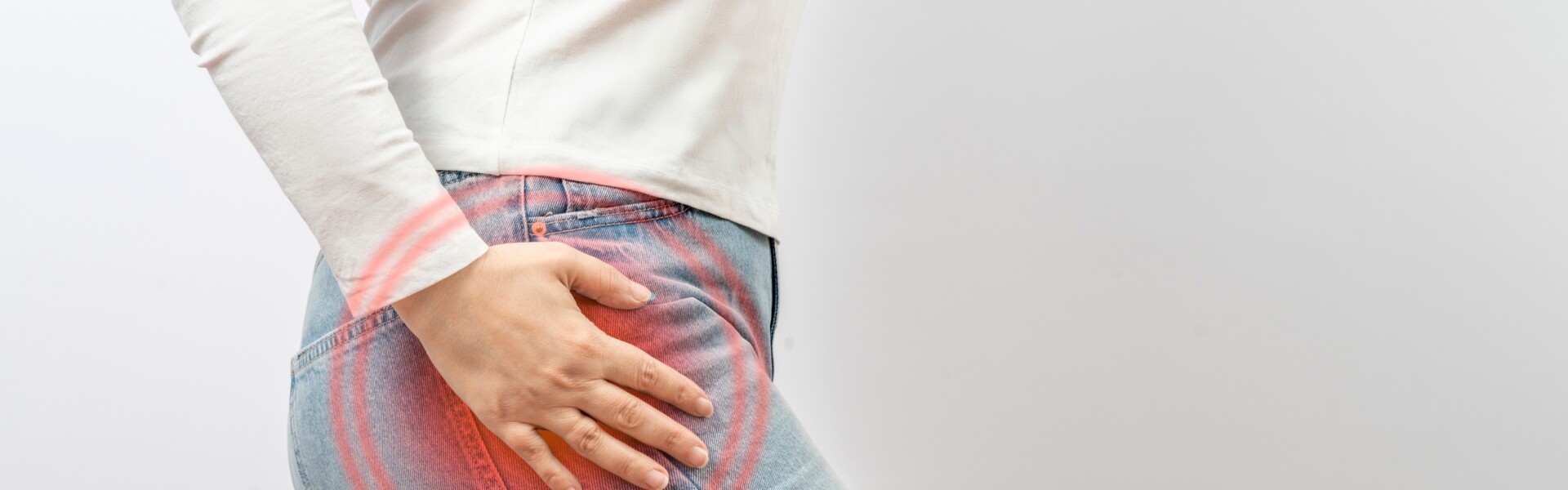
Pain on the bony outside of your hip – especially lying on that side at night, climbing stairs or after walking – is usually gluteal tendinopathy (often labelled trochanteric bursitis). It’s one of the most common causes of hip pain in women over 40, and it responds well to the right rehab. The catch: the intuitive things people try – stretching it, resting it – often make it worse.
Does this sound familiar?
- “I can’t lie on that side in bed”
- “It aches after walking, worse on hills or stairs”
- “Sitting with crossed legs sets it off”
- “I’ve stretched and stretched and it hasn’t helped”
- “It’s been going on for months”
What's actually going on?
The gluteal tendons anchor your main hip-stabilising muscles to the bony point on the outside of the hip, with a small cushioning bursa nearby. When the tendons are overloaded – or compressed by positions like leg-crossing, standing with your hip pushed out, or lying on your side – they become painful. That’s why aggressive stretching often aggravates it: stretching increases compression on the tendon. The fix is the opposite: reduce compression, then progressively strengthen.
How we treat it
- Assessment to confirm the diagnosis and rule out the hip joint or lower back as the real source
- Load and position education – the sleeping, sitting and standing tweaks that let the tendon settle (including how to make side-lying tolerable with pillows)
- Progressive glute strengthening – the treatment with the best long-term evidence, built up in stages
- Hands-on treatment and sports massage for associated tightness – without irritating the tendon itself
- A graded return to walking, hills, running or gym work
Why choose The Health Hub
- An evidence-led approach to tendon problems – education plus loading, which trials show beats injections over the long term
- Physio, sports massage and strength rehab in one place
- Rated 5★ on Google from 250+ patients
→Book your hip assessment or call 01444 817851
FAQs
- Why does it hurt most at night?
-
Lying on the painful side compresses the tendon directly, and lying on the other side lets the top leg drop across and compress it too. A pillow between the knees usually helps immediately – we’ll show you how.
- Should I stretch it?
-
Usually no – classic outer-hip stretches compress the gluteal tendons and often aggravate symptoms. Strengthening in the right positions works better.
- What about a cortisone injection?
-
Injections can ease pain short-term, but research shows education plus exercise gives better results by one year. Some patients use an injection as a window for rehab – we can work around one.
- How long does recovery take?
-
Tendons adapt slowly: expect noticeable improvement within 6-12 weeks and continued gains for months after. The home programme is where the results come from.