
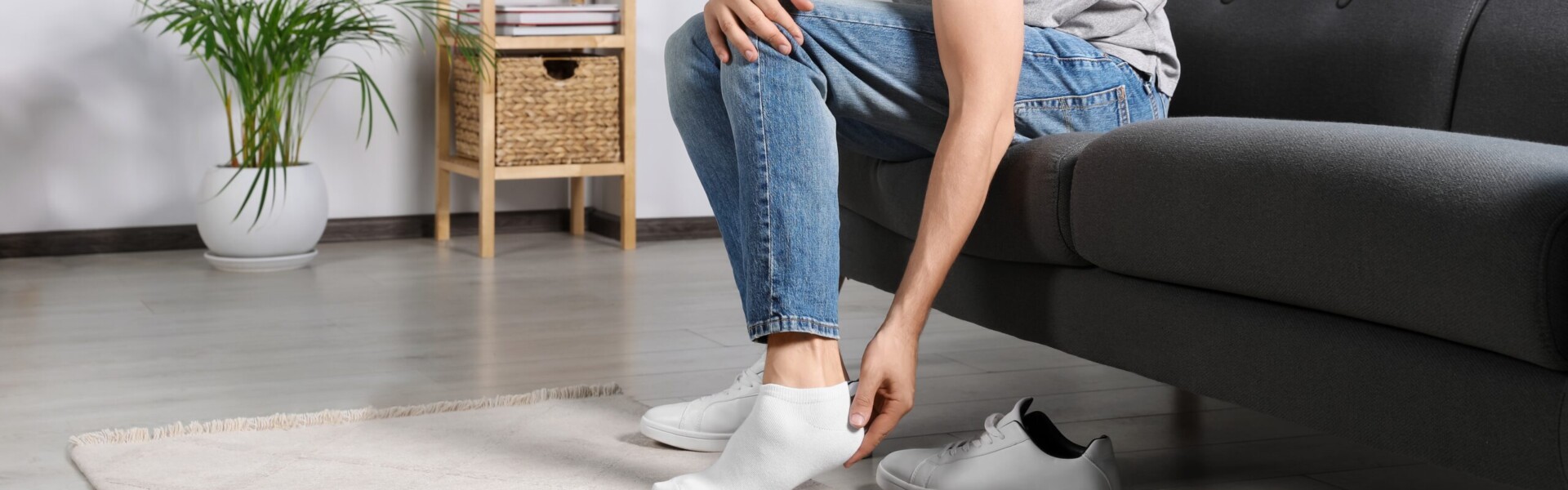
If the first few steps out of bed feel like walking on a bruise, and it eases once you get going only to come back after you’ve been sitting, it’s very likely plantar heel pain, usually called plantar fasciitis. It’s one of the most common foot problems we see, in runners and in people who have never run in their lives. It can be stubborn, but most people do get better, and there’s a lot you can do to help it along.
Does this sound familiar?
- A sharp or bruised feeling under the heel, often towards the inside
- Worst with your first steps in the morning, or when you stand up after sitting
- Easing as you warm up, then aching again later in the day or after a long walk
- It started after more walking or running than usual, new shoes, long days standing on hard floors or a change in weight
- Tight calves, or a heel that’s tender when you press it
What's usually going on
The plantar fascia is a thick band of tissue that runs from your heel to the base of your toes and helps support your arch. When it’s asked to do more than it’s used to, the point where it attaches to the heel becomes sore and sensitive. Despite the name, it isn’t mainly inflammation, which is partly why rest and anti-inflammatories alone don’t always shift it.
It’s most common between about 40 and 60, in runners and in people who spend long hours on their feet, and it often goes along with stiff ankles or tight calves. Left alone it usually does settle, but that can take many months. Most people find it settles sooner, and with a lot less frustration, once they know which changes actually help.
What can help
- Calming it down first. Cutting back on long walks, runs and standing where you can, and not going barefoot on hard floors for now.
- Footwear and insoles. A supportive shoe with some cushioning at the heel helps many people. A simple off-the-shelf insole is often enough, and expensive custom insoles are rarely needed at the start.
- Calf and foot stretches, particularly before your first steps in the morning.
- Progressive strengthening of the calf and foot, which there’s growing evidence for and which matters most if you want to get back to running or long walks.
- Hands-on treatment, taping or acupuncture to ease the pain while the rest takes effect.
- A plan for building back up, so you return to running or walking gradually rather than by guesswork.
If you’re still struggling after several months, a steroid injection or shockwave therapy is sometimes considered. We don’t offer either, but we can talk you through the options and advise on onward referral.
Your first appointment
Your first appointment lasts 45 minutes, with one of our chartered physiotherapists. We’ll ask when it started, what you’ve changed recently and what you want to get back to, then look at your foot, your ankle movement, your calf strength and how you walk or run. Bring the shoes you wear most, and your running shoes if you run.
You’ll leave with a clear idea of what’s going on, what to change and exercises to start that day. Some people only need one or two follow-ups to check progress. Others, especially runners building back up, find it helpful to come in every couple of weeks for a while. If anything suggests it isn’t plantar heel pain, we’ll tell you and point you in the right direction.
When to see your GP instead
- Heel pain that started after a fall or a jump, or that you can’t put weight on
- Numbness, tingling or burning in the foot
- A heel that’s hot, red and swollen, or pain with a temperature or feeling generally unwell
- Heel pain alongside back pain and morning stiffness, or swollen joints elsewhere
- If you have diabetes, any new foot pain, wound or change in feeling should be checked by your GP or practice nurse
Heel pain in children and teenagers is usually something different. Our article on growing pains explains more.
Prices and insurance
- Initial assessment and treatment (45 minutes): £79
- Follow-up treatment (30 minutes): £64
No GP referral is needed. You pay at your appointment and we’ll give you an invoice to claim back from your insurer if you’re covered. Many of our clinicians are recognised by AXA, Aviva, BHSF, Cigna, Simplyhealth, Westfield Health and WPA. Recognition varies by clinician, so ask us when you book.
Frequently asked questions
Questions we’re often asked about plantar fasciitis and heel pain.
- Is plantar fasciitis the same as a heel spur?
-
Not quite. Heel spurs are small bony growths that show up on X-rays of plenty of people with no heel pain at all. A spur doesn’t usually need treating in its own right, and the approach is the same whether you have one or not.
- How long does plantar fasciitis last?
-
It varies a lot. Some people improve within a few weeks of changing their footwear and starting the exercises. For others it takes several months, and occasionally a year or more. Most people do get better.
- Can I keep running?
-
Often, yes, at a reduced level, as long as your heel is no worse the next morning. We’ll help you find a starting point and a sensible way of building back up.
- Should I buy special insoles?
-
Try a supportive shoe and a simple off-the-shelf insole first. Many people don’t need anything more, and we’ll tell you if something more specific is worth considering.
- Will I need a scan?
-
Usually not. Plantar heel pain is normally diagnosed from your symptoms and an examination. A scan is only needed if something doesn’t add up or you’re not improving.
- Do I need a GP referral?
-
No, you can book directly. If you’re claiming on private health insurance, check whether your insurer needs a GP referral first.
Based in Haywards Heath, we see patients from:
You’ll find us at Unit 3, 2-8 Sussex Road, Haywards Heath, RH16 4EA. There’s free on-street parking on Sussex Road and two pay and display car parks a short walk away, and our entrance, treatment rooms and toilets are wheelchair accessible. We’re open Monday to Friday 8am to 7pm, and Saturday 8am to 1pm.
Book an appointment
If heel pain has been with you for more than a few weeks, or it’s stopping you walking or running the way you’d like, it’s worth getting it looked at. Book online or call us on 01444 817851.
Testimonials
Latest News
Keep up to date with our latest news.


As the days grow shorter and the weather begins to...

At The Health Hub, we are always looking for ways...